Making space for the arts
Making space for the arts
Making space for the arts
In this programme, we are seeking applications that aim to strengthen the skill base and diversity of artistic practice in public spaces.
Public arts activity can play an important role in shaping how people experience the places where they live, work and spend time. From city streets and public buildings to parks, coastlines and rural landscapes, public spaces can provide opportunities for shared cultural experiences that reach beyond traditional arts venues and engage people in new ways.
However, the sector faces significant pressure. Between 2009-10 and 2022-23, local government funding for culture has fallen sharply – down 29% in Scotland, 40% in Wales and 48% in England. Many traditional arts venues have been forced to close and rising ticket prices have made access to arts and entertainment prohibitive for many. The government has announced a £1.5 billion package to invest in cultural organisations over the next five years – a welcome development, though access and sustainability pressures remain. Opportunities to develop and sustain this work are often limited, and there is a need to strengthen the skills, knowledge and approaches that support high-quality public arts practice.
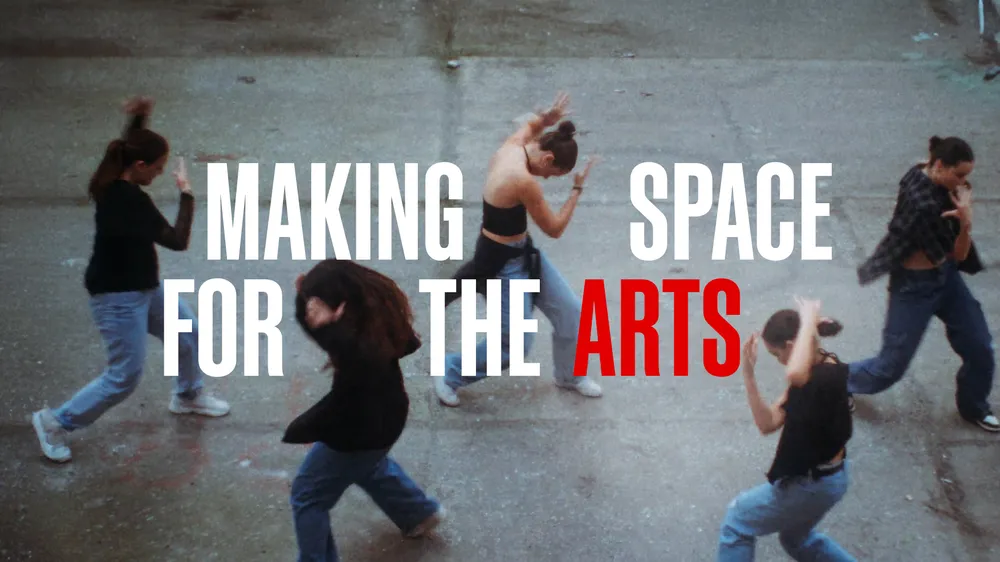
Making space for the arts is a three-year programme that launched in 2025. It aims to explore how large-scale artistic activity can be designed, created and delivered with and for communities, while strengthening the skill base and diversity of artistic practice in public spaces. We are now looking for a second cohort of around 10 Fellows who will continue to build on this learning.
Public arts events can bring healing, resilience and cohesion to individuals and communities. Many of the most successful festivals, for example the Rio Carnival, started in disenfranchised communities, with people coming together. The arts in all its different forms can be a cohesive force for resilience, identity and wellbeing.
Other countries have developed rich and innovative traditions of public arts practice that demonstrate what is possible, such as the Setouchi Triennale in Japan and the International Biennale of Circus Arts in France. And across the UK, artists, producers, designers, local authorities and community organisations like the Artichoke Trust and Without Walls are creating ambitious artistic work in public spaces. These projects can bring people together, reflect local identities, encourage participation and create moments of collective imagination and expression – and we want to grow and strengthen this kind of work by learning from the best of what is happening internationally and bringing those insights back to the UK.
We are interested in applications across all art forms that explore how artistic activity in public spaces can bring communities together and support creativity, participation and cultural expression. Your project should:
- Have a participatory or community-led approach – for example, working collaboratively to create an artistic moment that speaks to the identity of a particular community, or repurposing a public space with artistic activity
- Broaden who is involved in creating, shaping, and experiencing artistic activity – making it more accessible, inclusive and relevant to a wider range of people and places
- Be collaborative – working across artists, cultural organisations, communities and those responsible for shaping and managing public spaces
We will prioritise applications that adopt inclusive, participatory, and community-led approaches.
Please note: We look for a public benefit in all of our Fellowships. Your project should demonstrate how it will have a public benefit wider than advancing your personal artistic practice.
We are less likely to support projects that:
- Are driven by commercial objectives without a strong public benefit or community rationale
- Lack a community focus
- Do not engage with broader questions about how public spaces can engage communities or encourage participation
When developing your application, we encourage you to:
- Start with a specific challenge or opportunity in public arts practice that you are already close to – whether as a practitioner, producer or someone working with communities
- Be clear about what you hope to learn overseas and why those countries or contexts are the right place to find it
- Show the potential for your learning to contribute to change in the UK – whether through a specific project, collaboration or artistic event or moment you want to make happen
We welcome applications from anyone involved in the arts in the broadest sense. This includes:
- Artistic and creative practitioners across any art form who have an interest in working with communities
- Producers, promoters and designers of arts initiatives across any art form
- Those involved in the management of public spaces
You need not have a fully formed plan for an arts event. What matters most is your passion for arts in the community and your potential to make something happen when you return.
We do not support:
- A personal artistic project, such as a personal piece of work or exhibition
- An artist/writer/composer in residence scheme
- A piece of academic or theoretical research
These are the projects supported under this programme. Exploring a similar issue will not count against your application, but we encourage you to consider your unique perspective and approach.
2026
Ethics in Practice: Rethinking Visual Arts Participation
How rural areas can rediscover & celebrate what makes them unique
Reclaiming Canalsides: Public Art for Heritage, Community Pride and Anti-Tagging Solutions
Creative Landscapes: Regenerating Rural Communities Through Art Festivals
We Shape Our Culture: Embedding Citizen-Led Decision-Making into our Cultural Lives
We Move Cities: Diverse cultural events in public spaces heal, build resilience & belonging
Public Art as Relationship: Indigenous Models of Place and Community
Reclaiming Connection: How Public Art Can Rebuild Belonging in Rural Communities
Know your neighbour - Creating a cohesive community through the arts
Art and Learning Interventions to Disrupt the Phone Zombification of Public Transport
Prefer a Word document?
Download the full programme briefLearn more about this programme
In the video below, Nick Danziger and Kate Organ, who led on the development of the programme, share why we launched Making Space for the Arts in 2025 and who it’s for.
You can also read our blog to discover more about the thinking behind the programme.

Public arts activity can play an important role in shaping how people experience the places where they live, work and spend time. From city streets and public buildings to parks, coastlines and rural landscapes, public spaces can provide opportunities for shared cultural experiences that reach beyond traditional arts venues and engage people in new ways.
However, the sector faces significant pressure. Between 2009-10 and 2022-23, local government funding for culture has fallen sharply – down 29% in Scotland, 40% in Wales and 48% in England. Many traditional arts venues have been forced to close and rising ticket prices have made access to arts and entertainment prohibitive for many. The government has announced a £1.5 billion package to invest in cultural organisations over the next five years – a welcome development, though access and sustainability pressures remain. Opportunities to develop and sustain this work are often limited, and there is a need to strengthen the skills, knowledge and approaches that support high-quality public arts practice.
Making space for the arts is a three-year programme that launched in 2025. It aims to explore how large-scale artistic activity can be designed, created and delivered with and for communities, while strengthening the skill base and diversity of artistic practice in public spaces. We are now looking for a second cohort of around 10 Fellows who will continue to build on this learning.
Public arts events can bring healing, resilience and cohesion to individuals and communities. Many of the most successful festivals, for example the Rio Carnival, started in disenfranchised communities, with people coming together. The arts in all its different forms can be a cohesive force for resilience, identity and wellbeing.
Other countries have developed rich and innovative traditions of public arts practice that demonstrate what is possible, such as the Setouchi Triennale in Japan and the International Biennale of Circus Arts in France. And across the UK, artists, producers, designers, local authorities and community organisations like the Artichoke Trust and Without Walls are creating ambitious artistic work in public spaces. These projects can bring people together, reflect local identities, encourage participation and create moments of collective imagination and expression – and we want to grow and strengthen this kind of work by learning from the best of what is happening internationally and bringing those insights back to the UK.
We are interested in applications across all art forms that explore how artistic activity in public spaces can bring communities together and support creativity, participation and cultural expression. Your project should:
- Have a participatory or community-led approach – for example, working collaboratively to create an artistic moment that speaks to the identity of a particular community, or repurposing a public space with artistic activity
- Broaden who is involved in creating, shaping, and experiencing artistic activity – making it more accessible, inclusive and relevant to a wider range of people and places
- Be collaborative – working across artists, cultural organisations, communities and those responsible for shaping and managing public spaces
We will prioritise applications that adopt inclusive, participatory, and community-led approaches.
Please note: We look for a public benefit in all of our Fellowships. Your project should demonstrate how it will have a public benefit wider than advancing your personal artistic practice.
We are less likely to support projects that:
- Are driven by commercial objectives without a strong public benefit or community rationale
- Lack a community focus
- Do not engage with broader questions about how public spaces can engage communities or encourage participation
When developing your application, we encourage you to:
- Start with a specific challenge or opportunity in public arts practice that you are already close to – whether as a practitioner, producer or someone working with communities
- Be clear about what you hope to learn overseas and why those countries or contexts are the right place to find it
- Show the potential for your learning to contribute to change in the UK – whether through a specific project, collaboration or artistic event or moment you want to make happen
We welcome applications from anyone involved in the arts in the broadest sense. This includes:
- Artistic and creative practitioners across any art form who have an interest in working with communities
- Producers, promoters and designers of arts initiatives across any art form
- Those involved in the management of public spaces
You need not have a fully formed plan for an arts event. What matters most is your passion for arts in the community and your potential to make something happen when you return.
We do not support:
- A personal artistic project, such as a personal piece of work or exhibition
- An artist/writer/composer in residence scheme
- A piece of academic or theoretical research
These are the projects supported under this programme. Exploring a similar issue will not count against your application, but we encourage you to consider your unique perspective and approach.
2026
Ethics in Practice: Rethinking Visual Arts Participation
How rural areas can rediscover & celebrate what makes them unique
Reclaiming Canalsides: Public Art for Heritage, Community Pride and Anti-Tagging Solutions
Creative Landscapes: Regenerating Rural Communities Through Art Festivals
We Shape Our Culture: Embedding Citizen-Led Decision-Making into our Cultural Lives
We Move Cities: Diverse cultural events in public spaces heal, build resilience & belonging
Public Art as Relationship: Indigenous Models of Place and Community
Reclaiming Connection: How Public Art Can Rebuild Belonging in Rural Communities
Know your neighbour - Creating a cohesive community through the arts
Art and Learning Interventions to Disrupt the Phone Zombification of Public Transport
Prefer a Word document?
Download the full programme briefLearn more about this programme
In the video below, Nick Danziger and Kate Organ, who led on the development of the programme, share why we launched Making Space for the Arts in 2025 and who it’s for.
You can also read our blog to discover more about the thinking behind the programme.