Supporting adolescent mental health in schools - The Churchill Fellowship

Supporting adolescent mental health in schools

England is one of many countries where teenagers’ mental health is in crisis. Schools were not designed to provide mental health services. Teachers were not trained to be therapists. But when health systems struggle, schools across the world find themselves having to do more and more for the well-being of their students.

Having spent my career in UK Government working on policies that support the most vulnerable young people, I wanted to understand how different countries and school systems were responding to this pressure – and what England might learn from them.

Through my Churchill Fellowship, I spent the past year studying the experiences of over 30 organisations and schools across the USA, Canada, and South Korea.

Here are my takeaways:

Independent, technical advice for schools

First, if schools are having to provide support to struggling adolescents, then they need more support themselves. This means giving staff a wide range of well-researched teaching materials on mental health topics and access to training. Where possible, this should be backed up by a school-wide strategy for mental health, which can set out clear responsibilities, links to local services, and help schools identify their needs as they plan for the future. But developing such a strategy can be yet another pressure for already overworked staff.

This is why the model used in Ontaria stood out. School Mental Health Ontario operates as an independent source of expertise, providing evidence-based materials for teachers and helping school boards develop comprehensive mental health plans, rather than expecting individual schools to design these alone.

Mental health is a sensitive topic to cover in schools, including evolving issues such as social media, gender and race. All the more reason to provide teachers with the latest independent, high-quality materials.

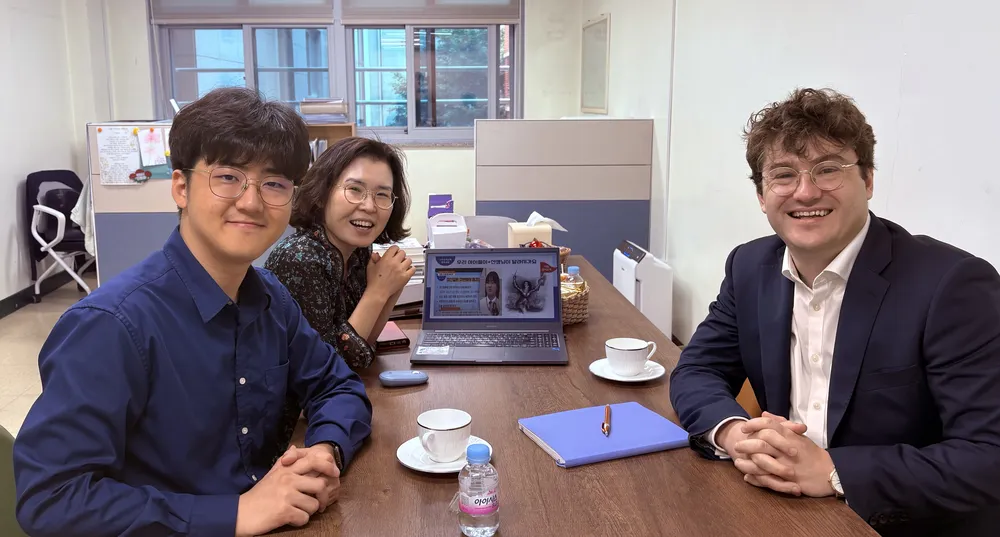
Charlie with teachers at Tanbeol Middle School. Download 'Charlie Samuda_Tanbeol Middle School'

Curriculum mandates

Many national and state governments make it mandatory for schools to teach their students about well-being. In New York, the first US state to make mental health a curriculum requirement, I saw how required lessons on mental health literacy and mental health first aid have given students practical tools and improved their understanding of how to seek help when needed. South Korea, in response to its own youth mental health crisis, is now encouraging its schools to teach Social and Emotional Learning.

My visits made clear to me the importance of carefully designing and backing up such requirements with adequate resources. Without money, staff and training, these become unfunded mandates, squeezing schools even further. And recent research should prompt us to question the effectiveness of universal well-being lessons compared to more targeted approaches. Happily, there is extensive research, such as the CASEL programme in the US, to help schools identify well-evidenced Social and Emotional Learning interventions.

"Improving adolescent mental health in schools is not simply about asking schools to do more, but about giving them the right tools."

Improving access

In every country I visited, dedicated school mental health counsellors were seen as essential. In England, the Government has plans to put one in every school by 2030. Trained counsellors, based on site, make it easier for students to access therapy, both practically and by reducing stigma. Given their expertise, they can help school leaders build bridges into local health services, getting the right support for students and fast-tracking help to where it's most needed.

But there are rarely enough of them. The Texas school boards I visited were just one of the many places where staff shortages and lack of funding have resulted in rising pupil-to-therapist ratios. Scarce resources and growing challenges have prompted innovation. South Korea is expanding the WEE Project, its school-based system of crisis counselling and family support. School boards in New York are upskilling school nurses to take on an enhanced mental health monitoring role. And Texas has developed a state-wide telemedicine initiative that provides students with free, short-term support from qualified professionals.

I also heard a great deal about how schools in the US and Canada make effective use of their guidance counsellors, who provide pastoral support, sitting midway between an academic and clinical role. It's not a position that’s widespread in the English school system and may merit more exploration.

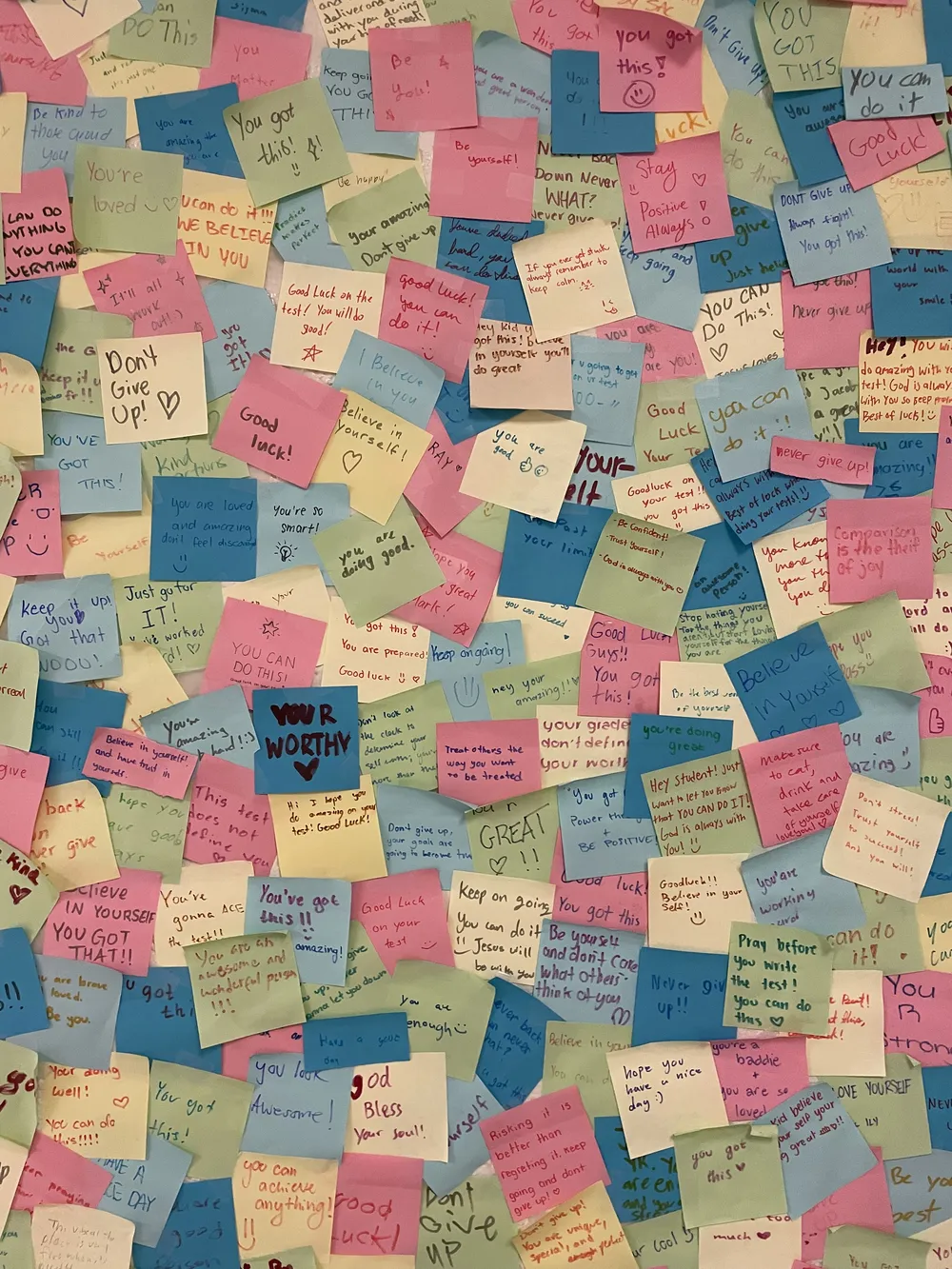
Students from Scarborough Middle School share encouraging messages. Download 'Charlie Samuda_Scarborough Middle School'

School and student safety

Specific local factors in South Korea, the US and Canada made the school staff I spoke to particularly concerned about the link between mental health and student safety.

New York and Texas have developed shared assessment tools to help schools, health professionals and law enforcement identify high-risk behaviours that might lead to violent incidents on school premises. The federal government introduced Project AWARE to help schools take action to improve the mental health of their student body and reduce the risk of gun violence. And South Korea, with its history of high rates of teenage suicide, has all school pupils take a mental health screening check at age 10.

Looking ahead

This is not an easy subject, but it was encouraging to hear consistent messages from diverse experts about what schools are trying and what works.

Unsurprisingly, some of the most useful insights came from the many young people who were kind enough to share their views with me on school, mental health, and adolescent life. Many spoke about the importance of having the right support, provided by trusted adults, embedded in everyday school life, rather than something accessed only at a point of crisis.

These conversations, together with what I learned from the organisations I visited, reinforced for me that improving adolescent mental health in schools is not simply about asking schools to do more, but about giving them the right tools and building support around them – a lesson I will continue to draw on as my research continues.

Charlie Samuda is an Assistant Director at the Home Office. He writes in a personal capacity.

Disclaimer

The views and opinions expressed by any Fellow are those of the Fellow and not of the Churchill Fellowship or its partners, which have no responsibility or liability for any part of them.

Related

Blogs & conversations

“Kindness and Goodwill”: Developing Postvention in Prison

With self-inflicted deaths in prisons remaining consistently high, Piers Barber set out to explore how prisons can respond with stronger postvention – systematic aftercare following a suicide. His Fellowship took him to New Zealand, Australia, and Canada, where he saw examples such as the embedded role of chaplains in New Zealand prisons, new trials in Australia, and trauma training models for staff in Canada. He is now sharing his reflections with UK practitioners and policymakers, calling for leadership, mapping of all contact points, and varied support to strengthen suicide prevention in custody.

By Piers Barber,

Blogs & conversations

Scaling Suicide Prevention: Lessons for the UK from India, the USA, and Canada

In memory of his friend Olly, who died by suicide in 2017, Rory Keddie set out to explore how medical students can be better prepared to support people in crisis. His Fellowship took him to India, the USA, and Canada, where he learned from innovative approaches using technology, policy change, and university frameworks. Building on his work with the Dr SAMS project, which has already trained over 2,800 UK medical students, Rory is now working to expand training and engage policymakers so suicide prevention becomes a core part of every doctor’s education.

By Rory Keddie,

Blogs & conversations

Where the Churchill Fellowship magic happens

Tim Woodhouse travelled to Iceland, Slovenia, and the USA to explore how to reduce domestic abuse-related suicides. Here, he reflects not only on the people and projects he encountered during his travels, but on the impact that followed – from giving over 100 talks to frontline teams and securing national media coverage, to influencing policy discussions and beginning a PhD. As Tim writes, “the years after you return home is actually where the power of the Churchill Fellowship can kick in – and where all the magic can happen.”

By Tim Woodhouse,

Blogs & conversations

Giving Suicide a Language

I grew up without the words to talk about suicide – and didn’t speak about my own bereavement until my forties. My Fellowship set me on a path to change that, taking me to India and Canada to explore suicide prevention in communities like my own. Since then, I’ve joined a global network of preventionists, trained in early intervention, and started sharing what I’ve learned – from working with therapists to leading workshops with young people to help open up conversations.

By Anoo Bhalay,

Newsletter Sign Up