From a classroom in Kenya to a STEM learning workshop in Yorkshire - The Churchill Fellowship

From a classroom in Kenya to a STEM learning workshop in Yorkshire

In September 2006, aged 18 and having just finished my A levels, I arrived at a rural primary school in the foothills of Mount Elgon. My house had no electricity or running water. I went to teach, but I learned from the Kenyan teachers, who managed classes of 60 or more with limited resources, and from pupils whose enthusiasm for learning stayed with me.

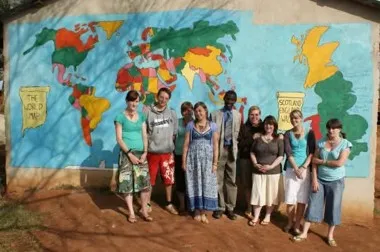
The 2009 volunteers and Birunda’s head teacher in front of the finished world map.

I went back in 2007 and met a head teacher starting a unit for deaf and hard-of-hearing children. Its “classroom” was a tin shack with bare iron walls, where children who needed visual teaching sat on second-hand desks. My first cheque was for £50; a university appeal, with a jar of coins and some sponsored chest waxing, eventually raised £1,700 for two brick classrooms and an office.

The 2009 Fellowship

In 2009, a Churchill Fellowship gave me the opportunity to return to Birunda Primary School with eight university student volunteers. We aimed to support the unit, give trainee teachers experience of teaching with limited resources, and explore how we could contribute to the school’s longer-term development.

Working alongside Kenyan teachers gave the volunteers valuable classroom experience and introduced us to different approaches to teaching and learning.

What Kenya taught me

Learning should be visual and hands-on: Children who cannot hear need visual ways to understand ideas, and simple, creative approaches can make learning more accessible. A giant world map painted on a classroom wall, for example, provided a resource that the whole class could use.

Everyone belongs: The children in the unit had not always received the support they needed. When one student’s patient one-to-one tuition helped a boy say his first words, I saw what individual attention and inclusive teaching could achieve.

Leave something that lasts: Our plan to help with the building changed when local builders took on the construction work, and the volunteers did their best work when I stepped back and trusted them. I learned that recognising local expertise and supporting others to lead can create a more lasting impact than doing the work ourselves.

"Seventeen years ago, the Fellowship sent me to Kenya. The teachers, children, and communities I met there taught me more than I taught them, and STEM by the Sea is built on that learning."

How my thinking has changed

In 2009, I thought mainly about what volunteers could bring: kit, money and enthusiasm. I now believe the best help is the kind that stays after you leave. I kept supporting Birunda, raising over £100,000 as it grew to over 100 pupils.

From 2016, I managed the Mount Elgon Trust on a two-year contract, overseeing schools, a hospital, an orphanage, and building projects for nearly 2,000 students. I also worked to encourage local funding for projects, rather than relying on overseas donations.

My family came too, and our veranda became a home school for about 15 children, including our own two, who learned Swahili there. In 2019, we moved to Malawi, where I taught at an international primary school through the Covid pandemic.

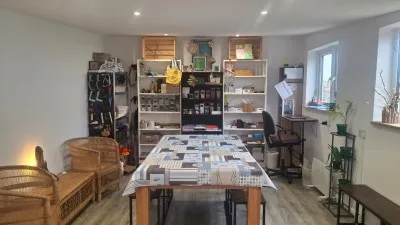
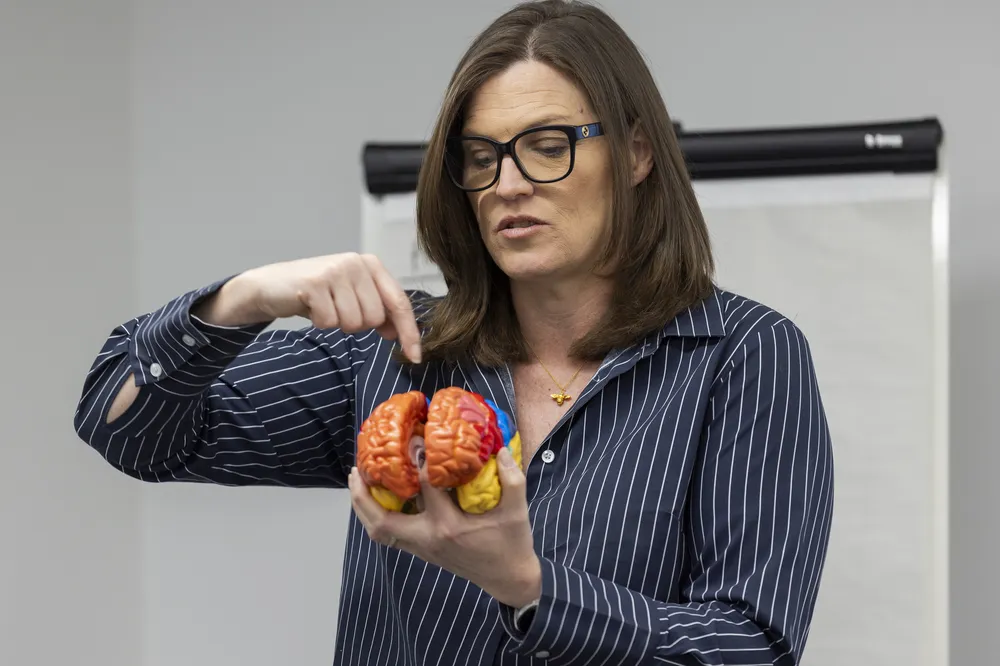
The STEM by the Sea workshop in Bempton.

Bringing it home to the Yorkshire coast

Back in the UK, I taught Key Stage 2 in local primary schools as a class teacher with a passion for science, design and technology, and hands-on learning. In August 2026, I left the classroom to build STEM by the Sea in Bempton, near Bridlington. Kenya runs through everything it does, as the lessons I learned through my Fellowship continue to shape how I approach this work.

Visual and hands-on learning: Every workshop gives children a problem to solve. They design, make, test, and improve their own solutions, using what the coast gives us: driftwood, pebbles, sand, and rock pools.

Everyone belongs: STEM by the Sea is open to everyone, including families visiting on holiday, but I focus on children who may not be served well by mainstream education, such as home-educated children and those in Education Otherwise Than At School (learning arranged outside a school setting). Elective home education in the East Riding rose by 29% in a year, and Bridlington South is among the most deprived wards in Britain.

Leave something that lasts: I am working with local primary schools and youth groups, aiming to leave kits and lesson plans so teachers can carry on without me. I have also set up STEM by the Sea C.I.C., a community interest company (a social enterprise run for community benefit), to fund free and subsidised places, because family income should never limit a child’s access to hands-on learning.

Seventeen years ago, a Fellowship sent me to Kenya for a summer. The teachers, children, and communities I met there taught me more than I taught them, and STEM by the Sea is built on that learning.

To find out more, visit stembythesea.co.uk.

Disclaimer

The views and opinions expressed by any Fellow are those of the Fellow and not of the Churchill Fellowship or its partners, which have no responsibility or liability for any part of them.

Related

Blogs & conversations

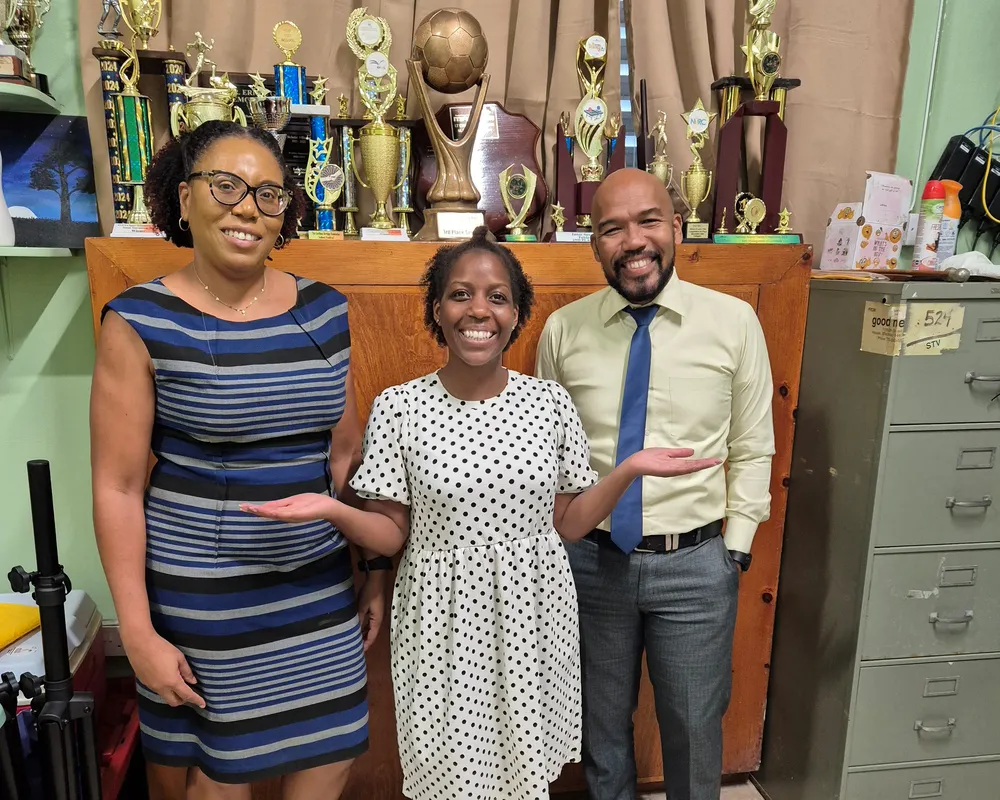
In conversation with Natasha Cox: Learning leads to new creative Saturday school for Black boys

We spoke to Natasha Cox about how her Churchill Fellowship helped shape the next stage of Actively SeeK.I.N.G, the CIC she founded to support Black boys through creative arts. Drawing on learning from schools in the USA, Ghana, and the Caribbean, Natasha has launched the House of K.I.N.G.s Saturday School. She reflects on how the Fellowship deepened her work, opened new doors, and helped turn her research into practical support for young people in East London.

By Natasha Cox,

Blogs & conversations

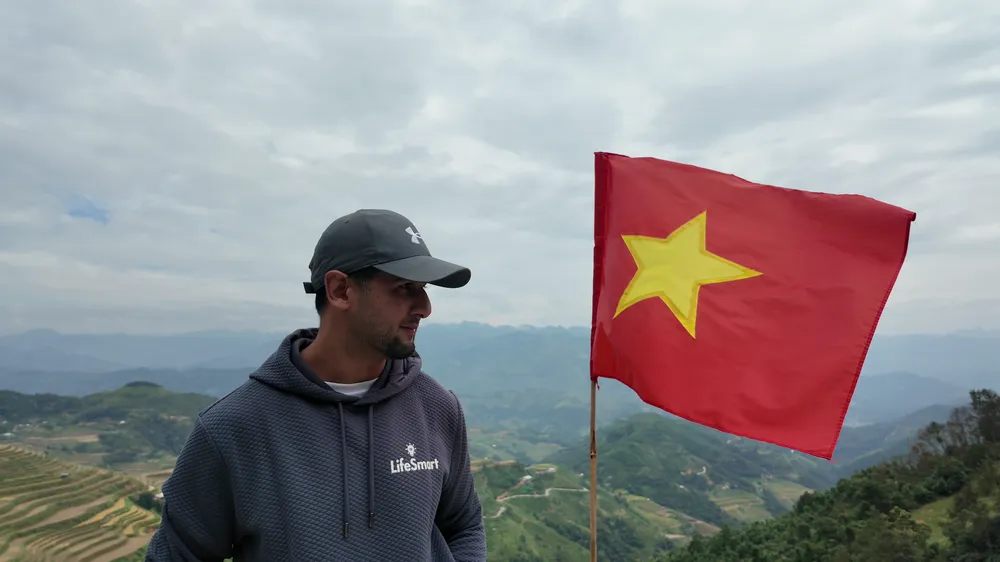
In conversation with Ali Zafar: Redefining financial literacy and shaping policy

We spoke to Ali Zafar about how his Fellowship is shaping new approaches to financial education in the UK. After already founding LifeSmart, Ali used his Fellowship to explore why financial literacy remains low, learning from systems in Singapore, Vietnam, and Bali. His research has led to a new framework for understanding how financial capability develops, and has already informed updates to his work and contributions to UK policy discussions. Ali is now finalising his report and developing resources to share his findings across government, charities, and the private sector.

By Ali Zafar,

Blogs & conversations

What it Takes to Build Trauma-Responsive Systems

After her Fellowship exploring trauma, attachment, and ACEs, Jane Pepa reflects on what it takes to move from trauma-informed training to real system change. Through her work with the Merseyside Violence Reduction Partnership, she has supported over 12,000 public service staff, from education to policing, to better understand and respond to trauma. Now working to embed trauma-responsive approaches across systems in Merseyside, she shares how this learning is being applied in practice through collaboration and ongoing support.

By Jane Pepa,

Blogs & conversations

Building together: rethinking teacher wellbeing and career sustainability

During her Churchill Fellowship in Ghana, Dr Chiedza Ikpeh explored how teacher wellbeing grows through community, adaptability, and shared responsibility. Speaking with teachers, she how collective approaches help educators thrive, even in challenging conditions. Witnessing this resilience reshaped how she understands teaching and what allows careers to be sustained over time, and Chiedza is now bringing this learning into her research and development work with teachers across the UK.

By Chiedza Ikpeh,

Newsletter Sign Up